
Ceramics Courses
Courses run typically run over four terms a year: spring, summer, autumn and winter and are for beginners and all levels of experience. Classes are either for wheel throwing or hand building, this allows students time to learn and develop one area of working with clay at a time. If your not sure which one, you can join one of our taster sessions to try them out first.
Every student will have their own wheel if joining our wheel throwing only courses and our hand building students have plenty of space to work at different height tables. We have over 30 glazes to choose from, 15 coloured slips, underglazes, oxides, and engobes. Students enrolled can book additional add-on sessions for those would like additional time to work independently.

Wheel Throwing Courses
Wheel throwing only courses, suitable for beginners and levels of all experience. Learn how to throw, trim, decorate and glaze your pieces according to your experience and skill level on Mondays, Tuesdays and Thursdays 10am-1pm and 6pm-9pm.
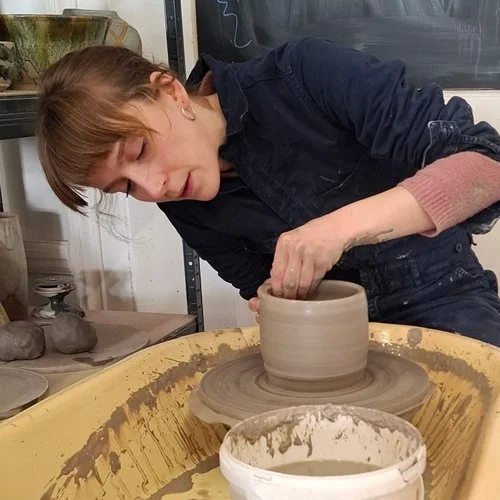
Wheel Throwing Friday Night Course
Friday’s 6-9pm, short wheel throwing ceramic courses are suitable for beginners and all levels of experience. Everyone has their own wheel and you will learn skills in wheel throwing, surface decoration and access to our 30 glazes.
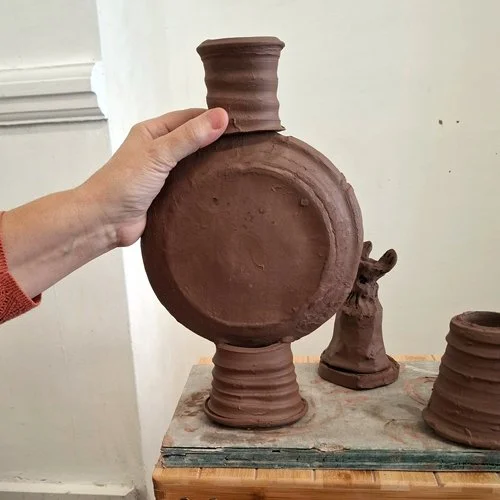
Hand Building Courses
Hand building ceramic courses, suitable for beginners and all levels of experience. Learn how to coil, slab build, pinch pots and extrude clay. Students will have the choice of 30 glazes, slips, oxides and underglazes for decorating, Wednesday’s 10am-1pm, 2-5pm, 6-9pm.
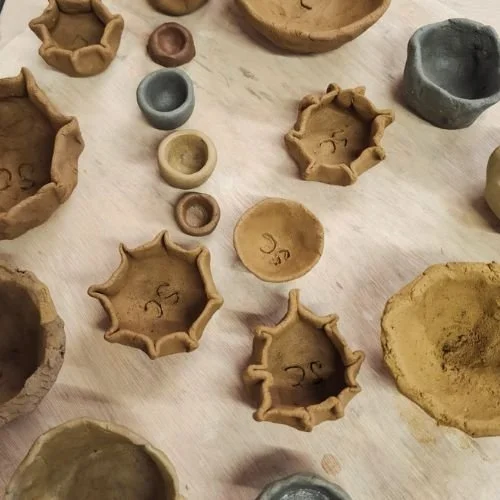
Introduction to Wild Clay
This short course is designed for anyone interested in learning how to work with wild, locally sourced clay as a material. By exploring and working with local wild clay, you’ll gain a deeper understanding of the material in its natural form and its unique characteristics.
Follow us on Instagram


